Why Choose an Epoxy Kitchen Floor
The kitchen is one of the busiest rooms in any home. It deals with spills, dropped utensils, foot traffic, grease, moisture, and constant cleaning. Because of that, the flooring needs to do more than just look nice. It needs to be durable, easy to maintain, and able to handle daily wear without becoming a headache.
An epoxy kitchen floor offers exactly that. It creates a seamless, durable surface that resists stains, scratches, moisture, and common household messes. Unlike some traditional flooring options, epoxy does not have grout lines that trap dirt or seams that collect moisture. It gives the kitchen a clean, polished appearance while making cleanup much easier.
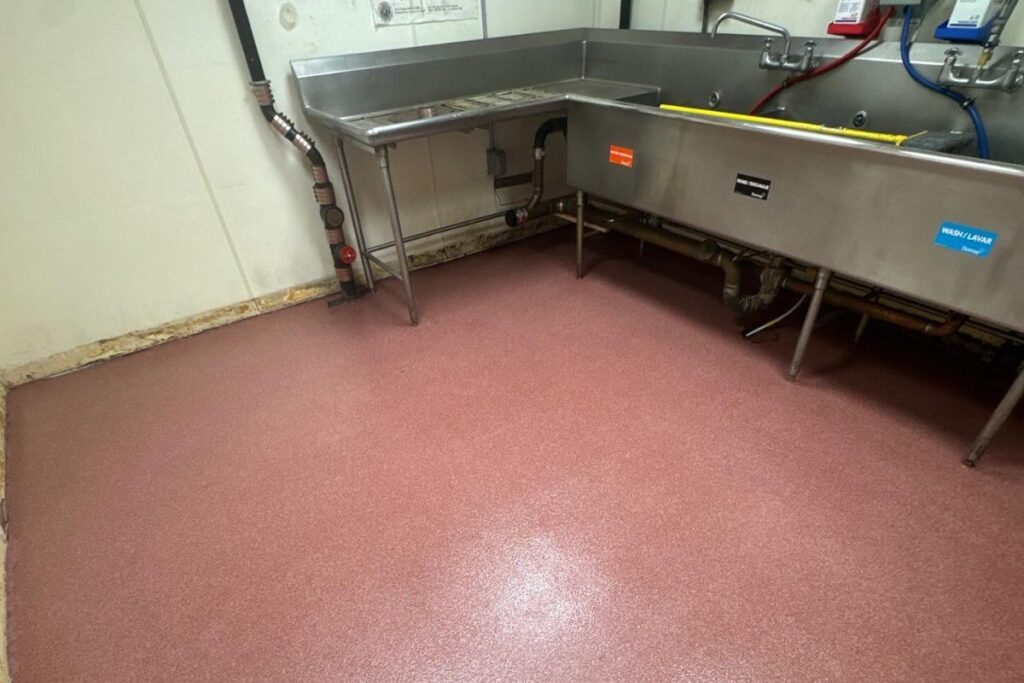
Epoxy flooring works well in both residential and commercial kitchens. In a home, it helps create a sleek, modern finish that holds up to everyday life. In a professional setting, it provides a stronger, more practical surface that can handle heavy use. Whether you want a minimalist design or a decorative finish, epoxy flooring offers a smart balance of style and function.
For homeowners searching for an epoxy kitchen floor near me, the real appeal is simple: it looks great, lasts a long time, and makes kitchen maintenance easier.
Benefits of an Epoxy Kitchen Floor
Durable and Long-Lasting
Kitchens see constant activity, so the floor needs to keep up. Epoxy is known for its toughness and ability to resist scratches, stains, and heavy foot traffic. That makes it a strong option for families, cooks, and busy households.
Seamless Surface
One of the biggest benefits of epoxy is its seamless finish. There are no grout lines to scrub and no joints collecting dirt. This makes it a great seamless kitchen floor option for homeowners who want a cleaner and more modern look.
Chemical and Heat Resistance
Kitchen floors regularly come into contact with cleaning products, food spills, oils, and hot items. Epoxy flooring offers good resistance to common kitchen messes and helps protect the surface from daily wear.
Customizable Design
Epoxy is not limited to one look. You can choose from solid colors, decorative flake systems, or metallic finishes depending on the style you want. This makes it easy to match both modern and traditional kitchens.
Slip-Resistant Options
Safety matters in a kitchen, especially when water or spills are involved. Textured finishes can be added to improve traction and create a safer walking surface.
Low Maintenance
A low-maintenance kitchen floor can save time and effort. Epoxy is easy to sweep, mop, and keep clean, making it ideal for homeowners who want durability without constant upkeep.
Types of Epoxy Kitchen Floors
Solid Epoxy
Solid epoxy creates a smooth, uniform finish that works well in modern kitchens. It has a clean appearance and is available in many colors, making it a good fit for homeowners who prefer a simple and polished look.
This option is popular for minimalist spaces because it gives the room a sleek and uncluttered feel.
Flake Epoxy
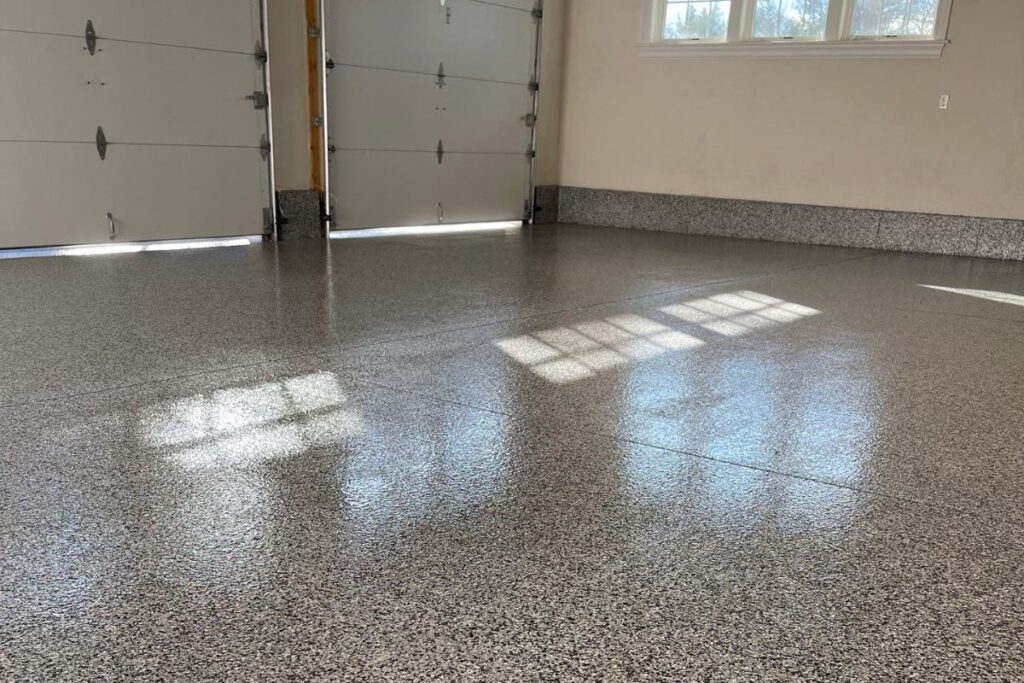
A flake epoxy kitchen floor includes decorative flakes mixed into the coating system. These flakes add texture, improve slip resistance, and help hide minor dust or imperfections.
This style is a great choice for busy family kitchens where practicality matters just as much as appearance. It offers a more textured finish while still looking clean and attractive.
Metallic Epoxy
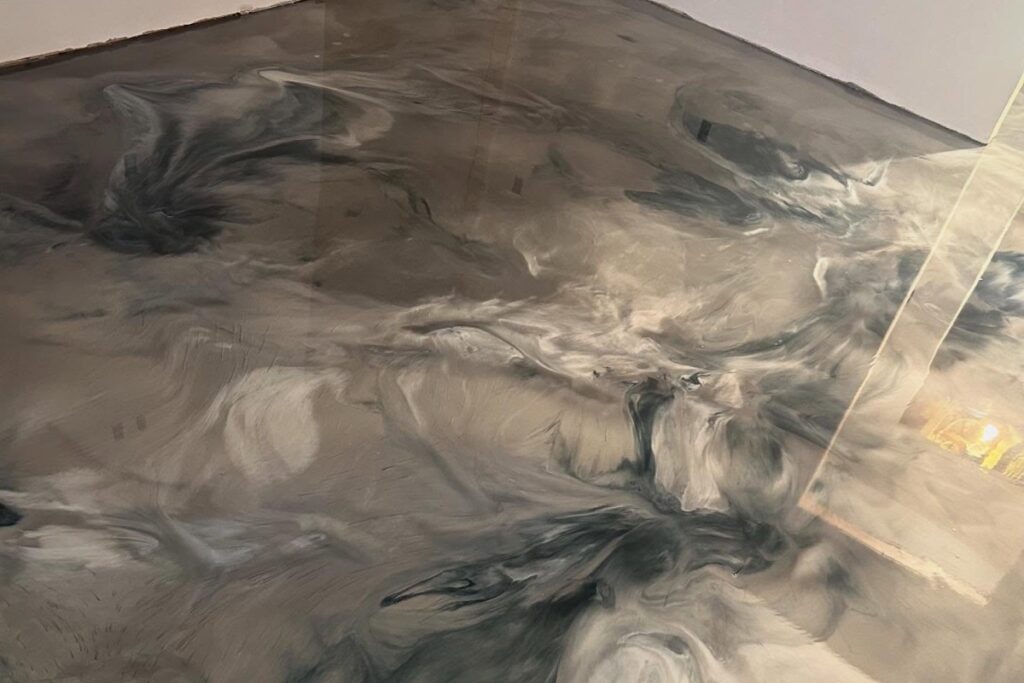
A metallic epoxy kitchen floor creates a more dramatic, high-gloss appearance with added depth and movement. This finish is often used in upscale or highly customized spaces where visual impact matters.
For homeowners who want something unique and eye-catching, metallic epoxy can turn the kitchen floor into a standout design feature.
Comparison Table – Epoxy Kitchen Floor Options
| Epoxy Type | Best For | Appearance | Main Benefits |
| Solid Epoxy | Modern homes | Smooth and uniform | Clean look, easy maintenance |
| Flake Epoxy | Busy family kitchens | Textured and decorative | Slip resistance, hides imperfections |
| Metallic Epoxy | Upscale kitchens | Glossy and dramatic | Luxury look, custom style |
Our Epoxy Kitchen Floor Installation Process
Surface Preparation
Every successful epoxy floor starts with proper preparation. The concrete is cleaned and mechanically ground to help the coating bond correctly.
Repair and Leveling
Cracks, chips, and uneven spots are repaired before the epoxy is installed. This creates a smoother and more reliable finished surface.
Base Epoxy Coat
A durable base coat is applied to form the foundation of the flooring system. This layer provides strength, adhesion, and long-term support.
Decorative Layer
If the homeowner chooses a decorative finish, flakes or metallic pigments are added at this stage. This is where the floor gets its custom appearance.
Topcoat Application
A protective topcoat is applied to seal the system. This adds durability, shine, stain resistance, and easier maintenance.
Why Choose Garage Floor Coating of Boston?
A high-quality epoxy kitchen floor depends on more than just the product. It also depends on proper installation. Surface preparation, repairs, coating thickness, and application technique all affect how the floor looks and how long it lasts.
Garage Floor Coating of Boston uses commercial-grade materials and proven installation methods to create floors that are durable, easy to clean, and visually appealing. Instead of relying on low-performance DIY kits, professional installation helps ensure a smoother finish, stronger adhesion, and better long-term value.
Whether you want a simple solid finish, a textured flake epoxy kitchen floor, or a bold metallic epoxy kitchen floor, the goal is to create a surface that fits your kitchen and performs well for years.
Frequently Asked Questions
Is epoxy good for a kitchen floor?
Yes, epoxy is a great choice for kitchen floors because it is durable, stain-resistant, and easy to clean. It also creates a seamless surface that works well in busy spaces.
Is epoxy better than tiles?
Epoxy can be better than tile if you want a seamless, low-maintenance surface. Tile looks great, but grout lines can trap dirt and require more cleaning over time.
Which epoxy flooring is best for a home?
That depends on the style and use of the space. Solid epoxy is great for a clean modern look, flake epoxy adds texture and grip, and metallic epoxy is ideal for a more decorative finish.
Is epoxy floor cheaper than tile?
In some cases, epoxy can be more cost-effective than tile, especially when you consider installation complexity and long-term maintenance. Pricing depends on the finish and condition of the floor.
What are the disadvantages of epoxy floors?
Epoxy floors require proper surface preparation and professional installation for best results. They can also feel harder underfoot than some other flooring types, and certain finishes may be slippery without added texture.
An epoxy kitchen floor is a smart option for homeowners who want a floor that looks clean, performs well, and lasts. It offers durability, stain resistance, easy maintenance, and a modern appearance that works in many kitchen styles.
Whether you want a smooth solid finish, a practical flake epoxy kitchen floor, or a bold metallic epoxy kitchen floor, epoxy gives you a durable kitchen flooring solution that blends function with style. For busy homes and modern spaces, it is a flooring upgrade that makes everyday life easier.