
Email: info@gfcboston.com
Your floors go through a lot; from constant foot traffic and furniture movement to moisture, spills, and shifting temperatures. Over time, traditional concrete or epoxy can chip, crack, or fade, leaving your space looking dull and dated.
That’s where polyurea flooring stands apart. Engineered for unmatched strength, flexibility, and long-term beauty, polyurea creates a seamless, slip-resistant surface that performs in any condition. Unlike epoxy, polyurea cures in hours, not days, and flexes with your concrete to prevent cracking. It resists UV damage, chemical spills, and abrasions, keeping your floors glossy, smooth, and protected for years to come.
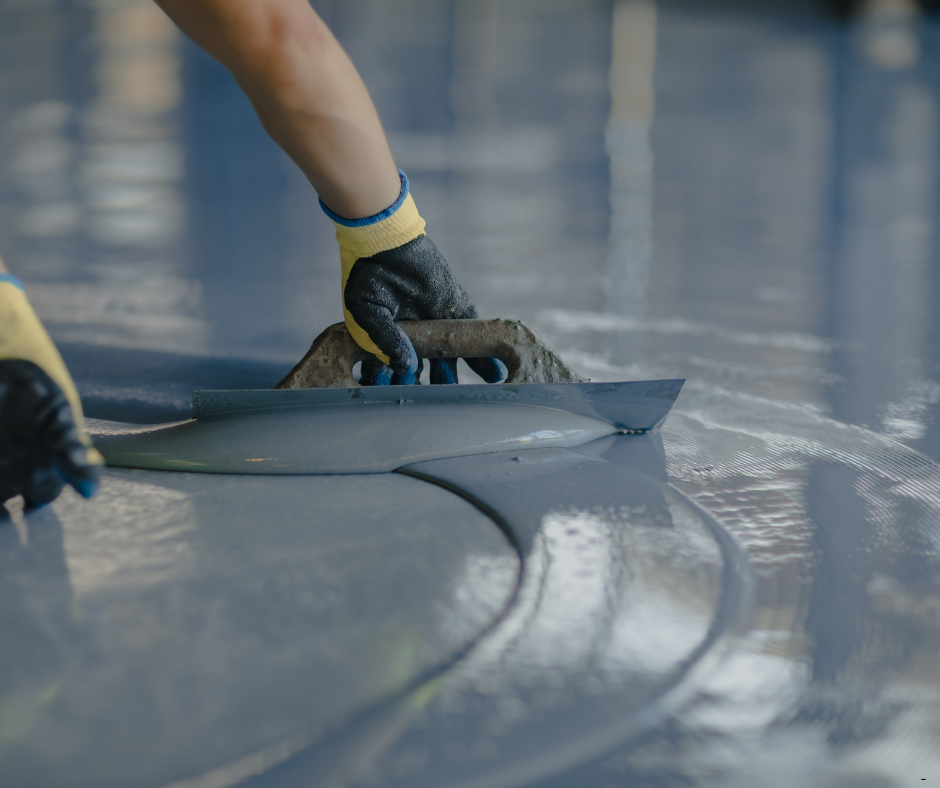
Polyurea floors are engineered for exceptional durability. They resist cracking, peeling, and UV fading, even under heavy use or extreme temperatures, so your floor stays strong and flawless year after year.
Unlike traditional epoxy that can take days to cure, polyurea sets in just hours, delivering minimal downtime and a flawless, long-lasting floor that’s ready to walk on (or park on) the very next day.
Polyurea coatings are specially formulated to resist fading and yellowing from UV exposure. Even in sunlit spaces like patios or garage entrances, your floors will maintain their rich color and glossy finish.
Let’s clear up the terms. Polyurea is a fast-curing coating chemistry known for being flexible and abrasion resistant. Polyaspartic is a type of polyurea, engineered to cure at a controlled, workable pace and to stay UV stable in sunlight. So when people ask about polyurea and polyaspartic, they’re usually talking about the same family, with polyaspartic being the version we use as a top coat because it gives our crews the working time to install it right. Polyaspartic links into a tight, flexible film that moves with the concrete instead of fighting it, which is why it doesn’t crack through a New England winter and why it holds its color instead of yellowing. If you have common questions about coatings, we keep the full list in one place.
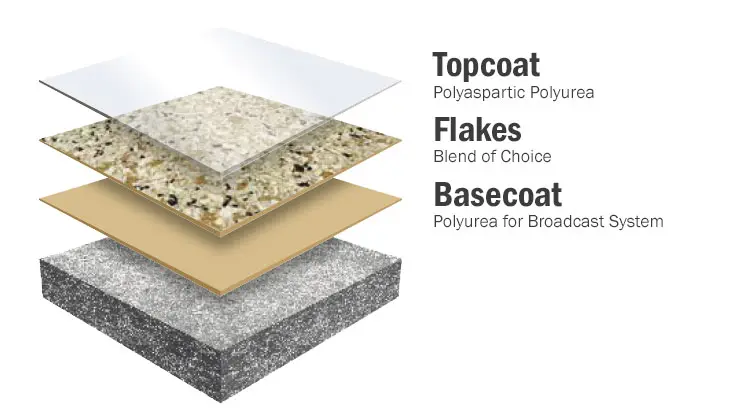
This isn’t really a contest, because they do different jobs and we use them together. Epoxy is a rigid, high-build resin that bonds hard to prepared concrete and creates a thick, strong base. What epoxy isn’t great at on its own is flexibility and UV. Polyaspartic solves that: laid over an epoxy or polyurea base, the top coat adds flexibility, UV stability, and abrasion resistance that carry the floor through hot tires, road salt, tools, and weather.
That’s a system done right, not a can off a shelf: the base does one job, the top coat another, and together they last. What decides the outcome is the layering and the install far more than the label on the bucket. If you’re deciding which to choose, that’s a comparison question we cover in our polyaspartic versus epoxy guide. This page is about the materials themselves.

Hear from Boston homeowners and business owners who transformed their concrete with our epoxy flooring. With hundreds of 5-star reviews, our customers say it best.
Posted on Google
 Andres Rochwerger
Trustindex verifies that the original source of the review is Google.
My experience with garage floor coating of boston and with Brian in particular was outstanding. My first interaction was about two years ago when Brian came for an estimate. At the time my garage floor was in extremely poor condition. I did some concrete repair to the floor and waited a couple years for it to settle. Brian returned this summer and provided me a fair estimate and answered all of my questions. I received multiple quotes from other providers and found that Brian had the most knowledge and patiently answered even more questions. I decided to move forward and GFC was diligent from then on. The crew that did the work was very professional, clean and friendly. Again, the communicated very well. They did an excellent job on the floor. Now, after a long wait, I finally have a beautiful garage floor - clean and shiny, without cracks and without cement deterioration. I look forward to returning to my garage every day. Thank you GFC and Brian.Posted on Google Steve MantiaCrew was great to work with. They worked like a well oiled machine. Cleaned up very nicely. The work came out awesome and garage looks like a new room.Posted on Google
 Andrew ArvedonAbsolutely AMAZING Work! I may move my bed into the garage and sleep with the cars - the floor is just that beautiful. Thank you to Brian and the team who worked on my cracked and powdery garage floor and made it look like a Ferrari Showroom. Just fantastic. Yes, this is probably a purchase that not many people know what's good, what's right, what it should cost, etc - but Brian's professionalism and the work that this local company did for me made it all feel JUST RIGHT and something that we are so proud to see and felt was very fair. In fact, in my mind, I thought it was going to cost more than their quote. I was prepared! Garage Floor Coating of Boston was recommended to me by a neighbor (after he spoke with 3 companies) and as he said, they were so easy and honest to work with. That's all I needed to hear and after Brian came out to my house, they were hired. NOTHING BUT THE HIGHEST PRAISE! The work is gorgeous. Thank you.Posted on Google
 Kristen NystromBrian and his crew were amazing to work with. Floors came out awesome! We couldn’t be any happier.Posted on Google
 Matthew NystromFloor came out amazing! Brian and his team were excellent and very easy to work with. We will definitely recommend them to anyone that is looking to get their garage floors epoxied.Posted on Google
 Richard FlynnVery pleased with the results! Entire process was smooth and easy. Everything went as expected.Posted on Google
 Magued BarsoumExcellent work. On time. Clean. Zero complaints.Posted on Google
 Elaine M. BiggieriIn June of this year we decided to upgrade the look of our garage. Several of our friends used Garage Floor Coating of Boston for their epoxy floors. We contacted Brian at Garage Floors. He came out to our home, gave us an estimate and within two days of the start of work we had a beautiful durable new floor. His workers were easy to work with. They arrived promptly, Told us what they would be doing and we couldn’t be happier with our new floor! We Recommend this Company wholeheartedly! Elaine & Alan Brodeur June, 2026
Made from advanced elastomeric technology, polyurea bonds deep into the concrete to form an impenetrable seal that protects against moisture, impact, and chemical wear. Unlike epoxy, it flexes with your foundation, preventing cracks caused by temperature shifts and settling over time.
This next-generation coating cures rapidly, creating a seamless finish that’s four times stronger and more flexible than traditional epoxy. Leaving you with a floor that can handle anything; cars, tools, pets, kids, and even direct sunlight, without losing its integrity or shine.
Hear from Boston homeowners and business owners who transformed their concrete with our epoxy flooring. With hundreds of 5-star reviews, our customers say it best.

“Garage Floor Coating of Boston is top notch! They are extremely professional, punctual, and responsive. The estimation process was streamlined and we were provided with a wealth of information about the products and installation process. We never felt pressured to hire them, which was certainly refreshing!
The floor came out beautifully, and I’ve already referred others. Give them a call!”
“We highly recommend Garage floor coating of Boston. The installers did a phenomenal job and we are very happy with the results of our garage floor. They had a great attitude, were efficient and work dillegently. Brian and Amir were beyond helpful and followed up with any questions or concerns.”
“I had an excellent experience all around. Brian was extremely thorough and provided a great deal of valuable information. Pricing was reasonable. Installation occurred exactly as described, and I’m very pleased with the final appearance. Overall, outstanding customer service and received a quality finished result.”
While both are durable coatings, polyurea outperforms epoxy in flexibility, strength, and longevity. Polyurea cures much faster, often within 24 hours, and expands and contracts with your concrete, preventing cracks and peeling. It’s also fully UV-stable, meaning it won’t fade or yellow over time, even in direct sunlight.
Yes. Polyurea is engineered to withstand a wide range of temperatures without becoming brittle or soft. It flexes with seasonal changes, making it ideal for garages, basements, and outdoor spaces where heat, cold, and humidity can take a toll on traditional coatings.
When professionally installed, a polyurea floor can last 15–20 years or more with minimal maintenance. Its chemical and UV resistance help it maintain color, gloss, and performance far longer than standard epoxy, providing lasting protection and value for your home.
Polyaspartic is a type of polyurea, engineered for a workable cure and UV stability, which is why we use it as a top coat.
Polyaspartic is a type of polyurea, engineered for a workable cure and UV stability, which is why we use it as a top coat.
Epoxy is a rigid high-build base; polyaspartic is a flexible, UV-stable top coat. We use them together.
Its chemistry stays flexible and UV stable, so it moves with the slab and holds its color.
It can, but on most floors we build a system: base plus polyaspartic top coat.
Fill out our quick form and we’ll get back to you within 24 hours. You’ll know exactly what your project will cost and how quickly we can get it done.